01.06.2025
Gegenstände, Utensilien und Geschirr, die nicht in die Spülmaschine gehören
Putting everything in the dishwasher might seem like a time-saver, but some items are definitely better off being washed by hand to preserve their quality, longevity, and even safety.
What Not to Put in the Dishwasher
Here’s a breakdown of common kitchen items that usually don’t belong in the dishwasher:
Wood and Bamboo
- Cutting Boards, Spoons, Bowls, and Handles: Wood and bamboo are porous. The high heat, harsh detergents, and prolonged exposure to water in a dishwasher can cause them to crack, warp, swell, splinter, and lose their finish. This can also create crevices where bacteria can thrive.
Cast Iron
- Skillets, Pots, and Griddles: Dishwashers strip away the seasoning (a layer of polymerized oil) that makes cast iron cookware non-stick and protects it from rust. This will ruin your pan and make it rust almost immediately.
Non-Stick Cookware
- Pans and Baking Sheets: While some manufacturers claim their non-stick pans are dishwasher-safe, repeated dishwasher cycles can degrade the non-stick coating over time. The high heat and strong detergents can cause the coating to chip, peel, or become less effective, releasing potentially harmful chemicals into your food.
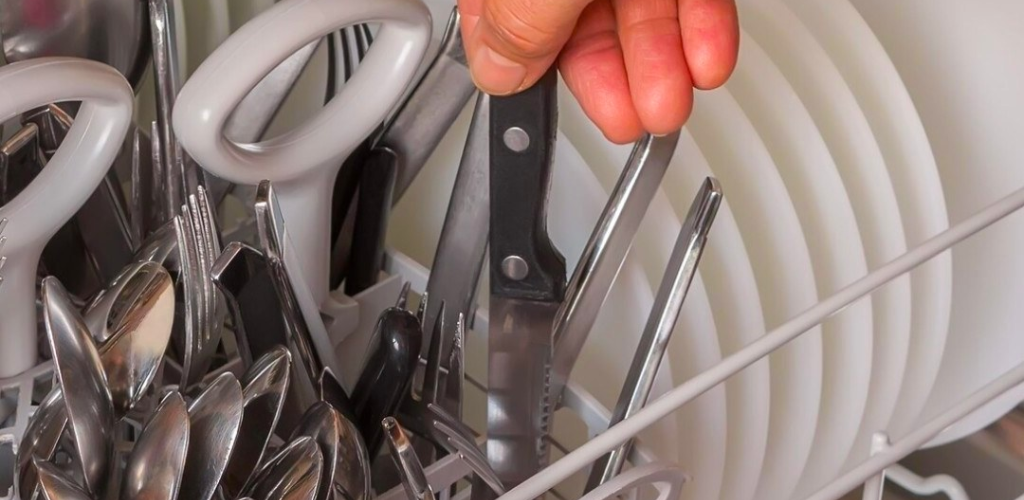
Sharp Knives
- Chef’s Knives, Paring Knives, and Serrated Knives: The dishwasher’s harsh environment can dull sharp knife edges by knocking them against other items. The heat can also damage the knife’s handle, and the detergent can pit or discolor the blade. Handwashing protects your investment in good knives.
Delicate Glassware
- Thin Wine Glasses, Crystal, and Hand-Painted Glassware: These items are fragile and can easily chip, crack, or break due to the high water pressure and jostling in the dishwasher. Crystal can become cloudy or etched over time. Hand-painted or gilded designs can fade or peel off.
Copper and Brass
- Pots, Pans, and Decorative Items: Copper and brass can tarnish and discolor in the dishwasher due to the detergents and heat. They can also develop unsightly spots and lose their characteristic shine.
Aluminum (Anodized and Non-Anodized)
- Cookie Sheets, Baking Pans, and Some Pots: Non-anodized aluminum can oxidize in the dishwasher, causing it to darken, pit, and develop a chalky residue that can transfer to other dishes. Anodized aluminum is more durable, but prolonged exposure can still dull its finish.
Insulated Mugs and Bottles
- Travel Mugs and Thermoses: The dishwasher’s heat can break down the vacuum seal that provides insulation in these items, rendering them ineffective at keeping beverages hot or cold. Water can also get trapped inside the insulation layers.
Gold-Plated or Gilded Dishes
- Dishes with Metallic Accents: The high heat and strong detergents can strip away or tarnish decorative gold, silver, or platinum accents on dishes, plates, or serving ware.
Rubber-Sealed Items
- Pressure Cooker Lids, Blender Bases: The high heat can degrade rubber gaskets and seals, causing them to warp, crack, or lose their elasticity. This can lead to leaks and affect the functionality of the appliance.
Anything Glued
- Items with Glued-On Handles or Decorations: The heat and moisture can dissolve the glues used to attach handles or decorative elements, causing them to fall apart.
When in doubt, always check the manufacturer’s care instructions for your kitchenware. If you’re unsure, handwashing is usually the safest bet to ensure your items last longer.